Saturday, August 30, 2014

Russia's Airborne: the VDV

Ukraine recently captured ten soldiers belonging to Russia’s airborne forces – the VDV (Vozdushno-desantnye voyska). The Russian government claims that the ten soldiers, who belong to a unit normally stationed in Kostroma, hundreds of kilometers northeast of Moscow, got lost while patrolling the Russian-Ukrainian border. This is extremely improbable – it’s the equivalent of the U.S. government claiming that a squad of Army Rangers stationed in Chicago got lost in Mexico while performing their regular duties as border patrol.

Russia has a large, well-armed, militarized Border Guard, which is a branch of the FSB (formerly the KGB). The VDV, in contrast, are a branch of the Russian military. Russia’s different government agencies are not known for working together – which led to disaster in the First Chechen War, when the Russian military failed to effectively support soldiers belonging to the Internal Troops (VV), who are a branch of the Ministry of Internal Affairs.

So, if not border guards, what exactly are the VDV for?

The Spearhead of the Russian Military

Along with the Naval Infantry, a branch of the Russian Navy, the VDV are one of Russia’s most elite organizations. Both, along with military special forces units, took part in the invasion of Crimea. The VDV also fought in Georgia in 2008, in Chechnya from 1994-’95 and 1999-2009, and in Afghanistan from 1979-’89. In all cases they outperformed units belonging to the Russian Ground Forces (Russia’s army proper) while fighting in similar roles as mechanized infantry. It is as mechanized infantry – soldiers carried in infantry fighting vehicle (IFVs; armed and armored troop carriers) – that the VDV are currently fighting in Ukraine.

VDV BMD-2s during a June 2014 exercise. Photo: Russian
Ministry of Defense
The modern VDV has a high ratio of volunteers to conscripts; Russian military personnel are a mix of one-year conscripts and volunteer “contract soldiers” (kontraktniki). The VDV also have preferential treatment regarding new equipment, as certain units are to make up most of Russia’s developing “Rapid Reaction Forces”, and as the current head of the Russian military is himself a member of the VDV. These same factors probably lead to the recent doubling of the size of the organization.

Despite their disproportionate use of new equipment (as witnessed in Crimea), the VDV’s rearmament has been incomplete. The Russian military as a whole tends to use small numbers of modern equipment supplemented by larger numbers of older equipment – an extension of the Soviet practice of arming specific units with advanced equipment, while producing vast amounts of less-advanced equipment for the majority of units. This seems to be the case even within the VDV, which has been acquiring modern vehicles slowly – a problem worsened by the recent expansion of the organization. While the VDV plans to acquire 1,500 new BMD-4M IFVs, most units still use the same BMD-2 as was first produced in 1985.

Denial of the Dead

The VDV has taken losses. Unknown soldiers were recently buried in Pskov, home of the VDV’s 76th Guards Air Assault Division. Ukraine claims to have captured BMD-2s belonging to that division, which Putin recently awarded the Order of Suvorov for unspecified actions.
The idea that Russian troops are not fighting in Ukraine is increasingly absurd. It’s not like Russia hasn’t denied its own military actions before – Putin denied any action in Crimea for a month before saying that “of course” Russian troops were involved. In 1994, the Yeltsin government denied using troops in Chechnya until Chechen separatists showed captured Russian soldiers on television. It was that war that led to the creation of the Committee of Russian Soldiers’ Mothers, an anti-war group that protested against the denial of Russian casualties. The Russian government forced the St. Petersburg branch of the group to register as foreign agents on Friday.

The verified death toll in eastern Ukraine is rapidly approaching 3,000.


Note: I have used U.S. Army sources that are themselves based primarily on Russian military sources not otherwise available in English. Their purpose is the study of foreign military strategy and tactics, not propaganda; I consider them reliable until proven otherwise.

Tuesday, August 26, 2014

Guns of August: Ukraine Captures Russian Soldiers

Four of the soldiers. Photo: Ukrainian Ministry of Defense.
The Ukrainian government released footage today showing interviews with Russian soldiers it says were captured in Dzerkalne, 20 kilometers within Ukraine's borders. The capture of the soldiers follows claims by Ukraine that large numbers of Russian troops have entered the country in support of pro-Russian separatists. The Russian government does not dispute that the captured soldiers were in Ukraine, but says that they entered the country by accident while patrolling the border, and continues to deny the presence of any other Russian troops in the country.

International reporters have increasingly reported seeing heavy weapons from Russia move into Ukraine in recent weeks.

VDV Prisoners

The ten prisoners appear to be paratroopers (VDV) of various ranks from the 331st Regiment of the 98th "Svirsk" Airborne Division, stationed in Kostroma. The soldiers say that they were told they would be going on a training exercise.

Representatives of the Ukrainian military claimed to have been in combat with VDV weeks ago. VDV usually fight on the ground, from armored vehicles, and are considered to be elite relative to the rest of the Russian military. These particular prisoners do not appear very highly motivated: one is quoted as saying "we've come as cannon fodder." The statement may have been made under duress. If they were patrolling the border, as the Russian government claims, this is the first time in history that VDV have been used in that role.

Mariupol: Invasion

The fighting in eastern Ukraine seems to have intensified recently. Ukrainian representatives say that Russian forces have launched an offensive towards Mariupol, south of Donetsk, one of the separatists' two strongholds. If there is fighting near Mariupol, which does appear to be the case, then it's not the separatists. Mariupol was recaptured by the Ukrainian government in June. In August, OSCE observers reported that the area was stable.

Peace talks in Minsk are becoming less and less likely to succeed in ending the violence. Between 2,000 and 2,500 people have died in the fighting so far, and hundreds of thousands more have been displaced.

Secret Strikes in Libya... by the UAE

It turns out that the unknown aircraft that struck Islamist* militias in Libya last week belonged to the United Arab Emirates (UAE). The air strike did not succeed in preventing the militias from capturing Tripoli's airport.
 
Islamist militiamen celebrate after capturing Tripoli
International Airport. Photo: AFP.
The planes – which operated out of Egyptian bases – were originally thought to be Soviet-made Su-24 bombers from Libyan stockpiles, which had previously been believed non-operational. The UAE operates American F-16s and French Mirage 2000s. Both are also used by Egypt. The use of U.S.-supplied weapons may be in violation of agreements over their sale. The Emirati planes flew from Egyptian bases during the bombing operation. Egypt considers the chaos in Libya to be a major national security issue.

The U.S., the U.K, France, Italy, and Germany released a joint statement condemning “outside interference” in Libya on Monday. All of the five except Germany participated in air strikes in support of rebels against the Qaddafi regime in 2011.

The Libyan government exerts no authority in the country. The chaos seems to be evolving into a civil war between two coalitions of militias – one Islamist, and one anti-Islamist. The anti-Islamists support the current elected parliament, while the Islamists support the outgoing parliament – meaning that Libya has, in effect, two rival legislatures.

Egypt has supported the anti-Islamists, who are led by a rogue general named Khalifa Haftar. The Islamists, themselves backed by Turkey and Qatar, currently control Benghazi and most of Tripoli (Libya's capital). Qatar probably also supports Hamas and Syrian Islamists, possibly including ISIS – two accusations it denies.

Egyptian representatives have not explicitly ruled out open intervention in Libya. The well-armed Egyptian military is the largest in the region, and would probably be able to quash the fighting in Libya with little difficulty if it was fully committed. An invasion in support of the anti-Islamists would almost certainly worsen the Islamist unrest in Egypt itself. Unrest has led to more than 3,000 deaths – mostly civilian – since a military coup overthrew the elected Islamist Prime Minister Mohammed Morsi in 2013. The Islamist insurgency in the Sinai Peninsula is ongoing.

The violence in the Middle East has had one good result: Egypt and Israel, who fought several bloody wars in the 20th century, are now close allies in everything but name.

*The term “Islamist” describes the belief that Islam should have a guiding role in politics. I am using the term exclusively to indicate the ideology, regardless of the actions used to further that ideology.

Monday, August 25, 2014

Old Weapons, Modern Wars: Terrorists with Tanks

During its dramatic expansion over the last few months, ISIS captured heavy equipment from both the Iraqi military and the Syrian military. Experts believe ISIS’ armor arsenal includes up to 28 M1A1M Abrams tanks, 30 T-55s, and five to ten T-72s. This is supplemented by anti-tank guided missiles (ATGMs) and surface-to-air missiles (both widely used by the rebels against the Syrian government), artillery (including 52 American M198 155mm howitzers and a number of Soviet BM-21 Grad multiple rocket launchers), and lightly armored Humvees.

On paper, that looks like a lot. The reality is less terrifying. I’ll discuss the armor ISIS has available.

The M1 Abrams: Great Tank – If Usable

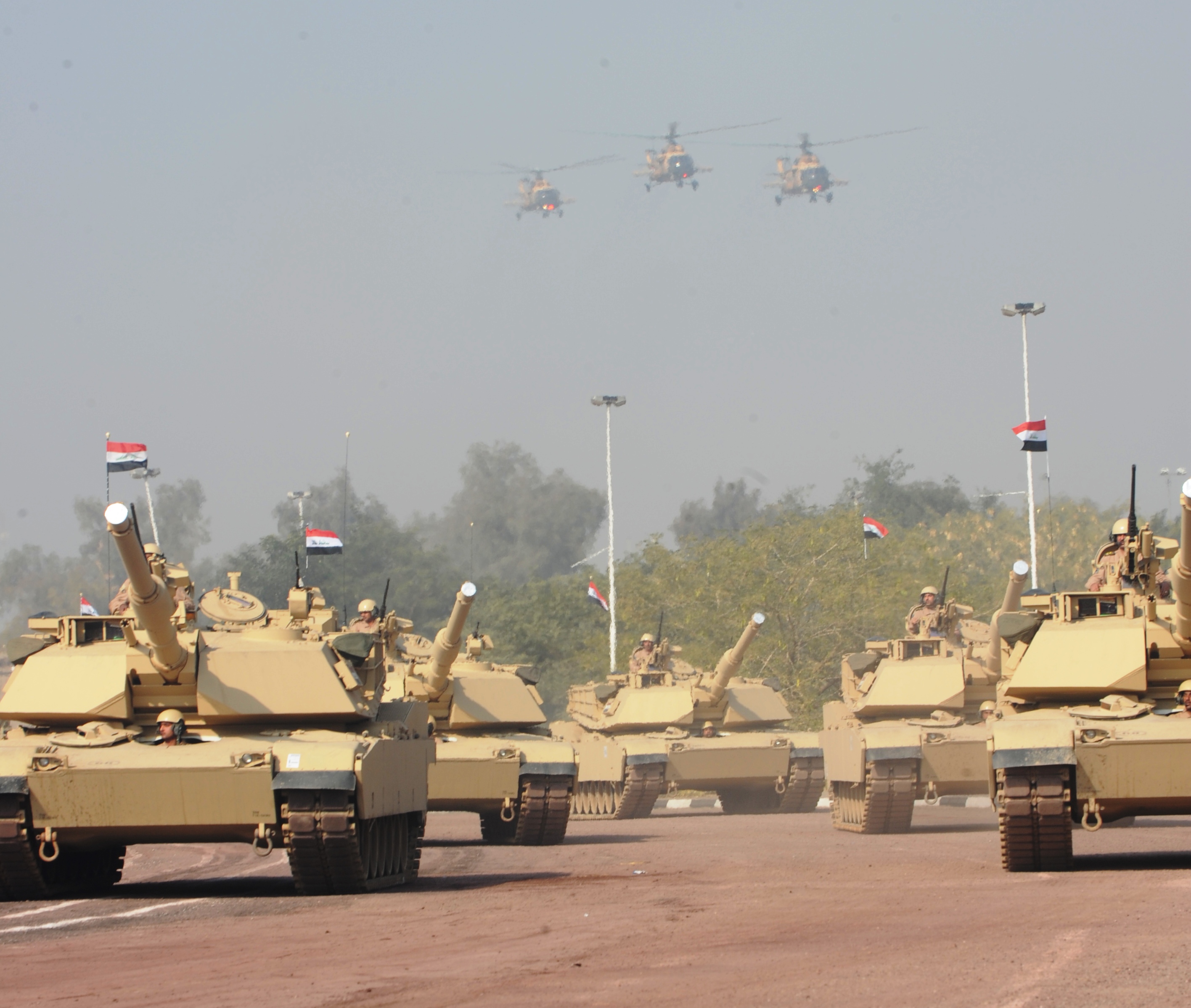
Iraqi M1A1Ms on parade in 2011. Photo: Wikimedia Commons.
The M1 Abrams* is the most effective weapon to have been captured by ISIS so far. The Iraqi government decided to buy it because it had been used against the Iraqi military twice – in 1991 and in 2003. In both cases, it devastated the tanks that Iraq sent to oppose it, and proved almost invulnerable to their fire. If you can’t beat ‘em, join ‘em. The tanks produced for Iraq do not have the absurdly effective depleted uranium armor and ammunition used in recent American models, but they do have improvements made to the engine to make it more reliable in the deserts of Iraq. In addition to the U.S. and Iraq, the Abrams is used by Saudi Arabia, Kuwait, Egypt, and Australia.

The M1s captured from the Iraqi military were not taken intact – the number of vehicles ISIS is believed to have captured corresponds with the number of vehicles the Iraqi Army reported to have been badly damaged. Some videos show ISIS destroying at least one of the tanks after it fell into their hands, suggesting that at least some of them are completely unusable. Those that aren’t will require significant maintenance to be used at all – not to mention good, continuous logistical support just to keep the engine running. ISIS would also need personnel trained to operate the tank. It is extremely unlikely that ISIS will be able to use a single Abrams in combat.

*M1 indicates all versions of the tank, M1A1 a specific improved version of the original, and M1A1M the Iraqi version of that version.

The T-72: Reliably Good Enough

A Syrian T-72 in 2012. Photo: Reuters/George Ourfalian.
The T-72 was meant to be a cheap, low-technology, but effective tank that could be fielded in massive numbers by the Soviet Union. It was widely exported.

When American tank formations demolished Iraqi armor in 1991, it was T-72s they were destroying. The M1 Abrams massively outclassed the T-72s in Iraqi use at the time (though T-72s used by Iraq’s Republican Guard did succeed in damaging a few M1s). T-72s have taken high losses in Syria, as they did in Russian hands in Chechnya. South Sudanese T-72s were recently manhandled by modern Chinese tanks in Sudanese service.

But the T-72 isn’t as awful as its record suggests. The frontal armor can stop an RPG-7 – the most widely used anti-tank weapon in the world. The 125mm main gun is enough to deal with most armored threats, given the right ammunition (ammunition quality makes an enormous difference when measuring the effectiveness of one tank against another). It’s also much easier to use and maintain than more advanced tanks. Improved models and international post-production upgrades make the better T-72s a good standard to measure other tanks by.

ISIS will probably be able to operate the small number of T-72s in their possession, making it much more of a threat than their M1s. While the Peshmerga and other Kurdish militias don’t have many anti-tank weapons capable of destroying a T-72 from the front, ISIS doesn’t have sufficient air defenses to protect their tanks from air strikes, and will struggle to replace any tanks and trained tank crews that they lose.

If the Iraqi Army is able to coordinate a combined arms offensive against ISIS, the M1s still controlled by the Iraqi Army should make short work of T-72s. This hinges on the ability of the Iraqi military to launch such an offensive – Iraqi M1s will need the infantry in close support to protect them from ATGMs, especially in urban areas. Iraqi forces have struggled to coordinate combined arms in the past.

The T-55: Showing its Age

A T-55 captured by ISIS in Syria. Photo: Reuters/Stringer.
With their M1s unusable and their T-72s few and far between, most of the working tanks in ISIS hands are T-55s. T-55s are widely used around the world, despite being old, crude – and, critically, unable to stop an RPG-7 with their frontal armor. If T-72s performed poorly in 1991 and 2003, then T-55s performed so badly that they may as well have not been used. Anything worse than a T-55 (like the Type 63s used by China during the Sino-Vietnamese war) is, in my view, absolutely terrible to the point of uselessness. That said, the T-55 itself is good enough if the opposition doesn’t have anything better – and having a T-55 is better than having no tank at all.

ISIS’ T-55s will not have a major impact unless they are used well tactically. If ISIS concentrates their T-55s and uses them aggressively, in concert with Humvee-borne infantry and concentrated artillery fire, they will be extremely effective against the Iraqi military, the Peshmerga, Syrian rebel groups, and the Syrian military. They will still be vulnerable to air strikes. Fortunately, ISIS does not seem to have used combined arms in this way so far. ISIS will probably continue to rely on light infantry, with tanks used as fire support and captured artillery used mostly for harassing fire.

T-55s are no match for the Iraqi Army’s M1s. Once again, effective use of combined arms by the Iraqi military will negate any advantage ISIS receives from their own tanks.

It’s important to note that the Peshmerga also have several T-55s – which may or may not be enough to balance out those used by ISIS. Peshmerga T-55s will struggle against ISIS’ T-72s if they ever meet.

The T-62, or: Less Bad Still Isn’t Great

A Peshmerga-operated T-62. Photo: Reuters/Yahya Ahmad.
According to a German source, ISIS also has T-62s. Syrian rebels of various stripes have captured T-62s from the Syrian government, as documented by numerous photos. ISIS’ T-62s are not included in the numbers above; they were probably mistaken for T-55s or T-72s by observers (T-62s have the same five road wheels of the T-55, though they are differently spaced, and a bore evacuator in the middle of the gun barrel like the T-72, though the gun is of slightly smaller caliber).

The T-62 is an improvement on the T-55, with a much better gun and thicker armor, and lies somewhere between the T-55 and the T-72 in effectiveness. In the Iraqi context, consider T-62s to be a valuable, but not decisive, augmentation to the T-55-dominated forces they accompany.

Humvees Aren’t Tanks

Humvees may be better protected than an unarmored vehicle, and better armed than an unarmed vehicle, but that’s not saying much. At most, the addition of Humvees to ISIS’ arsenal means that they have a machine gun platform that’s resistant to small arms fire. Considering that they already had technicals – pickup trucks with heavy machine guns or anti-aircraft guns on the back – the presence of Humvees is almost meaningless.

A Note on Anti-aircraft Weapons

ISIS does have low-altitude surface-to-air missiles and anti-aircraft guns. If concentrated, these weapons will be effective in driving off helicopters, but they’re not enough to stop an airstrike from a higher altitude. The anti-aircraft guns will most likely be limited to firing on ground targets – a role that they aren’t terrible at, but one they’re unlikely to be decisive in.

A Note on Artillery

ISIS has captured BM-21 Grad multiple rocket launchers – also used in eastern Ukraine by both sides. This Soviet weapon is used to cover a large area with an inaccurate volley of rockets, making it deadly for civilians if used on populated areas, but practically useless for picking off point targets. ISIS’ use of Grads will be limited by their inability to produce more ammunition.

In Iraq, ISIS has also captured American M198 155mm howitzers. While powerful and accurate, the M198 is difficult to learn to use; it is unlikely that ISIS will be able to employ them to their full effectiveness. That said, even inaccurate fire could be used for harassing fire or to shell a city.

Overall: Could be Worse

At the end of the day, ISIS having tanks and other heavy weapons is bad – but that doesn’t mean it’s catastrophic. They’re still outgunned by the Iraqi Army, and they only overmatch the Peshmerga by a little. Crucially, they have no effective response to aircraft operating at high altitudes – and heavy weapons are difficult to hide. It’s possible that U.S. airstrikes will deprive ISIS of their most powerful equipment, forcing them to abandon heavy weapons for guerilla tactics.

It all depends on how the weapons are used. If ISIS learns how to use them more effectively, and does use them in concert against Iraq, it’s a very different story.

Pollack, Kenneth M. Arabs at War: Military Effectiveness, 1948-1991. Lincoln, NE: U of Nebraska, 2002. Kindle file.

Sunday, August 24, 2014

This Week in War News: August 17-24

Russia and Ukraine

Ukrainian servicemembers in American equipment,
including Scorpion W2 camouflage. Photo: Reuters.
The Russian trucks that entered Ukraine without Ukrainian permission have left the country after delivering what is believed to be humanitarian aid to the separatist stronghold of Luhansk. A spokesman of the Ukrainian military says that they left carrying machinery from factories in the city.

Ukraine has held a military parade to celebrate the 23rd anniversary of its independence from the Soviet Union. Footage of the parade shows some soldiers wearing American body armor and Scorpion W2, the new standard camouflage pattern of the U.S. Army. The pattern – and other U.S. equipment – have been seen on Ukrainian servicemembers in eastern Ukraine.

Absent an open Russian invasion, the Ukrainian military is on the verge of capturing Luhansk and Donetsk, another city held by the pro-Russian separatists.

The humanitarian situation for civilians has been negatively affected by the widespread use of imprecise Soviet-era artillery and undisciplined volunteer militias by both sides. Between 2,000 and 2,500 people have died in the fighting. Peace talks in Minsk will likely have no result.


Iraq

An Iraqi Turkmen fighter in a defensive position in Amerli.
Photo: Ali al-Bayati/AFP/Getty Images
Combat between ISIS and the Iraqi military near a major oil refinery. ISIS has attacked the facility multiple times, but the Iraqi military has successfully repulsed all attacks.

The Shia village of Amerli is under siege by ISIS. A Turkmen militia appears to be defending Amerli, but the villagers are lacking food and water. Observers fear a massacre if the terrorist group captures the town.

Rising sectarian violence in Iraq worsened this week. Sunni parliamentarians suspended negotiations to form a new government after Shia gunmen killed 73 Sunni worshippers at a mosque in Diyala province. The removal of divisive Shia Prime Minister Nouri al-Maliki has not been enough to reduce tensions.


Syria

ISIS has taken territory from the Syrian government. Giving in to public demand for retaliation, the Syrian government has launched airstrikes against ISIS in response. Unlike American airstrikes in Iraq, they seem to have mostly hit civilians. Failure to act meaningfully against ISIS may delegitimize the Syrian government – especially if the moderate U.S.-backed rebels of the Free Syrian Army succeed in fighting the terrorist group. The Syrian government ignored ISIS earlier this year, as the group initially targeted Free Syrian Army, who have fought the Syrian government since 2011.

A British member of ISIS beheaded American journalist James Foley this week. American special forces failed to rescue him and other hostages earlier this summer, finding that the hostages had been moved shortly prior to the raid.


The Syrian military has introduced improvised bar armor for its T-72 tanks – a low-tech solution to a high attrition rate. The bars and chains, set at a distance from the tanks’ armor, are meant to detonate incoming anti-tank rockets prematurely to prevent destruction of the vehicle. The improvisation suggests that Syrian government armories are running out of reactive armor – a more effective, but more expensive, technology that does the same thing with a directed explosion.

More than 191,000 people have been confirmed killed in the Syrian Civil War. Some estimates put the death toll at above 260,000.


An air strike hits a house in Gaza. Photo: Reuters.

Israel and Gaza

The exchange of rockets and airstrikes resumed again when peace talks collapsed on Wednesday. Both sides claimed victory when Israel withdrew ground troops from Gaza on August 5.

The barrage of airstrikes has had a severe effect on Gaza’s economy, destroying 360 factories. Thousands of acres of farmland have been ruined.

Hamas has executed 18 people it accuses of “collaborating with Israel” without trial. Along with three Hamas commanders, more than 2,000 others, mostly civilians, have been killed in Gaza; fewer than seventy Israelis, almost all soldiers, have been killed.


Afghanistan

The Taliban have launched a major offensive in southern Afghanistan’s Helmand province. Helmand has been the site of near-continuous fighting since 2006. Afghan police claim that the Taliban have been using night-vision goggles, suggesting a foreign supplier.

Reports indicate that the Taliban have been using drugs to make bombers – including children – suicidal.

The disputed presidential election is still being recounted.

The total number of casualties over the course of the thirteen-year war is unclear.


Libya
Militiamen ride on a T-55. Photo: Reuters.

Islamist fighters have seized the airport in Tripoli, Libya’s capital. Unknown planes struck Islamist positions last week. The diverse militia groups fighting in Libya have coalesced into roughly Islamist and nationalist coalitions, which are in conflict with each other. The Libyan government has failed to exert effective control.


India: Kashmir

Indian and Pakistani troops exchanged fire across the Line of Control early Saturday morning, killing four civilians. Both countries accuse the other of shooting first. An Indian border guard was killed in cross-border fire last month.

Hopes for improved relations were dashed last week when India’s new Prime Minister Narendra Modi cancelled high-level talks with Pakistan, after Pakistani representatives met with an Indian separatist group. Pakistani diplomats have talked with the group in the past. Modi earlier accused Pakistan of waging a proxy war in Indian Kashmir. The separatist insurgency in Kashmir has led to 93 deaths this year.

This year, other insurgencies in India have killed 476.


China: Xinjiang

China has executed eight people believed to be behind the 2013 bomb attack in Tiananmen Square. The attack is believed to have been the work of Uighur separatists. The Chinese government has launched a massive crackdown on ongoing Uighur unrest in Xinjiang.

Uighur representatives have disputed the government’s narrative on a recent supposed riot, claiming that police fired on a peaceful protest, and have killed others in “massacres”.

Saturday, August 23, 2014

Revisiting the Convoy

A truck from the convoy passes through a rebel-held
checkpoint. Photo: Sergey Ponomarev, for the New York Times.
The more than 100 Russian trucks that entered Ukraine yesterday has deposited its load of humanitarian aid with the separatists in Luhansk, and is returning to Russia. More trucks will follow. So far, the trucks do not appear to have been impeded by the Ukrainian government or the separatists; Russia has threatened an unknown response to the disruption of the convoy. Ukrainian representatives have said that they will not fire on the convoy, but that their response may change if it is found to be carrying anything other than humanitarian supplies. Russia insists that the convoy is carrying only humanitarian aid, and says that Ukraine was delaying delivery arbitrarily. Hopefully, the separatists will distribute the aid to those in need; the humanitarian situation in Luhansk is severe.

Ukrainian customs officials were in the process of inspecting the convoy when the trucks began entering Ukraine through a rebel-held checkpoint without their permission.

Reports claim that mortar fire landed "near" the convoy, though it was not damaged. The source of the mortar fire is unknown, as is the target.

Ukraine and other countries believe that the separatists are extensively armed and trained by Russia, as one separatist leader claimed last week. NATO says that Russian forces are currently present in Ukraine and participating in the fighting. Russia denies the accusations, and says that NATO has no proof. When NATO has released evidence of Russian involvement, Russia has claimed that it is falsified or insufficient.

The intervention precedes upcoming talks on the conflict in Minsk, in which the leaders of Russia and Ukraine were to discuss ending the crisis. German Chancellor Angela Merkel is facilitating the talks, which may be sabotaged by Russia's unilateral intervention.

It is the 75th anniversary of the Nazi-Soviet Pact, which divided Poland and the Baltic states between the two totalitarian regimes.

Friday, August 22, 2014

Russia Enters Ukraine

Trucks from the convoy approach Ukraine in Russia's Rostov
region. Photo: Reuters
Thirty-four trucks of the humanitarian convoy that approached the international border August 12 crossed it through a rebel-held checkpoint, possibly accompanied by pro-Russian fighters, early this morning. Ninety more are expected to follow; there are about three hundred trucks in the convoy in total Red Cross representatives are not accompanying the convoy, saying that they are unsure of their safety. Ukraine has called the movement of trucks a "direct invasion."

The Ukrainian government agreed to the aid in principle; the next step was to be a full inspection, which has not occurred. The Russian government has threatened to respond to any "disruption" of the convoy; representatives of the Ukrainian military say they will not do so. The probable response would be a full, open invasion of eastern Ukraine. Ukraine has said it will liaise with the Red Cross to avoid any accusations of violent action against the convoy.

Both the Red Cross and Ukrainian officials have not had access to the convoy. BBC journalists who checked a number of the trucks at random last week found many of the trucks to be mostly empty. It's unclear why. Ukrainian representatives say Russia refused talks over the inspection of the convoy.  Russia accuses Ukraine of having insisted on inspection to delay the convoy unnecessarily over the last few weeks.

The trucks are approaching Luhansk, the scene of intense fighting between the Russian-supported separatists and the Ukrainian government. The convoy's progress will probably be impeded by the fighting – since they are moving into an active war zone. "Disruption" may be unavoidable.

Less than two months ago, the U.N. sent aid into Syria without the Syrian government's permission. It's possible Russia could claim that event as a precedent for the current unilateral humanitarian intervention into Ukraine.

The situation is unclear, and the consequences of the intervention cannot be predicted at this point.

Absent direct Russian support, the Ukrainian military is on the verge of recapturing both Luhansk and Donetsk, the two major strongholds of the separatists. So far, about 2,000 people have been killed in the fighting – about a tenth of the intensity of the Syrian Civil War.

It is exactly 100 years and 5 days since Russian forces invaded German-occupied East Prussia during World War One.

http://www.bbc.com/news/world-europe-28892525
http://www.dw.de/ukraine-accuses-russia-of-invasion/a-17871568
http://uk.reuters.com/article/2014/08/22/uk-ukraine-crisis-idUKKBN0GL1VH20140822
http://edition.cnn.com/2014/08/22/world/europe/ukraine-crisis/
http://www.cbc.ca/news/world/ukraine-crisis-russian-aid-convoy-drives-into-ukraine-1.2743706
http://www.nytimes.com/2014/08/23/world/europe/russian-convoy-ukraine.html?_r=0
http://online.wsj.com/articles/russia-accuses-kiev-of-deliberately-halting-humanitarian-aid-convoy-1408697601

Wednesday, August 20, 2014

India: The Great Importer

As of a week ago, the U.S. leads defense exports to India (as measured in dollar). This is a big deal. India is the largest importer of military equipment on the face of the planet, followed by China and India’s traditional rival Pakistan. The U.S. is followed in arms exports to India by Russia, France, and Israel.

India’s arms imports are extremely politically loaded. The Indian government is frequently criticized for not making enough of an effort to buy locally, or to at least produce locally or acquire transfer of technology with its arms deals.

Where the Money Went
U.S. Air Force C-17s responding to Hurricane Katrina.
Figures for scale. Photo: Wikimedia Commons

The Indian Air Force is receiving the most U.S. equipment, included improved C-130Js and a total of ten enormous C-17s, the latter in a deal worth more than four billion dollars (Rs 2.5 lakh crore at current exchange rates). Both transport planes are currently being used by multiple countries to supply humanitarian aid to northern Iraq, and can fly fully-loaded from one end of India to the other without refueling. The Air Force will also receive Chinook transport helicopters and Apache attack helicopters with Hellfire air-to-ground missiles. Both have served extensively in Iraq and Afghanistan.

The Indian Navy is receiving P-8I Neptune maritime reconnaissance planes. American P-8s took part in a recent naval exercise near Singapore.

The Indian Army was meant to receive 145 lightweight M777 howitzers (also extensively used in Afghanistan), possibly for assignment to a new “Mountain Strike Corps” to be deployed near the border with China, but the sale has been delayed for cost reasons. Earlier delays have forced up the price. The M777 would have been India’s first new tube artillery (as opposed to rocket artillery) since the ‘80s. The Army is also seeking more Apache attack helicopters, also intended for the same Mountain Strike Corps. The Army’s spending priorities may change under its new leadership.

Pakistan: the Other Cold War

The question of who exports to India is extremely politically charged. Since the 60’s, India’s defense market had been dominated by Russia. Imports were politically colored – the U.S. exported to Pakistan, while the Soviet Union armed India. The Indian public still has a certain strategic wariness of the U.S. due to the American-Pakistani relationship, but that issue may leave the forefront now that Russia is also exporting to Pakistan.

The long, slow arms race between India and Pakistan will probably continue for the foreseeable future (the two have fought multiple wars against each other). India seeks to maintain a military dominance that would allow it to reliably defend the Indian-held parts of Kashmir; Pakistan seeks a non-nuclear deterrent to Indian invasion.

Why Import?
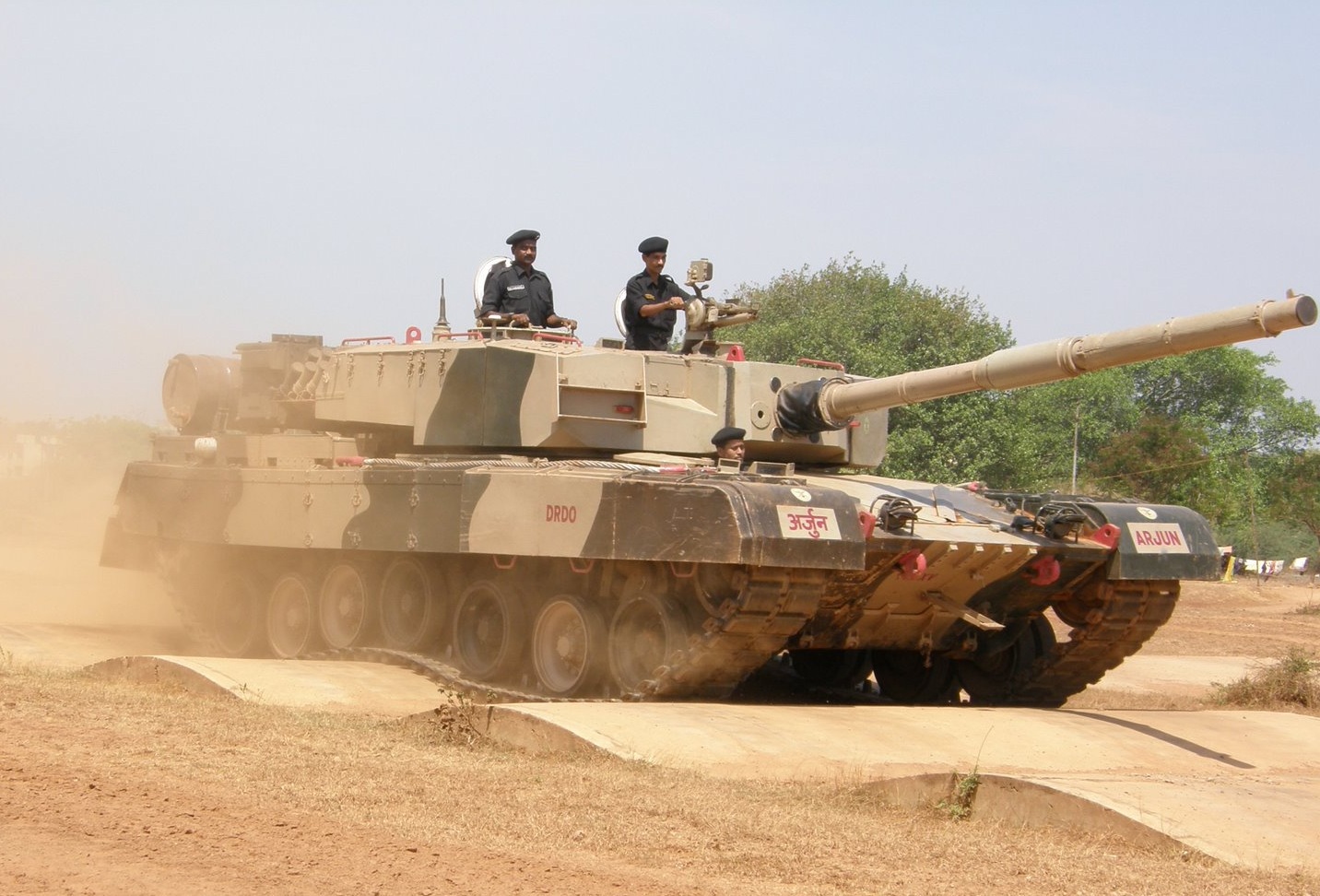
An Arjun in 2008. Photo: Wikimedia Commons

India has industrial problems.

It’s not that India can’t produce good equipment. The Indian-designed Arjun main battle tank outperformed Russia’s newest tank, the T-90, in 2010 trials. India is one of a handful of countries that have successfully produced jet fighters, and one of even fewer to have sent an unmanned mission to Mars.

The problem is that the Indian arms industry struggles to produce high-quality equipment in high volume, probably due to issues with quality control and labor quality. The Indian Navy has had dozens of avoidable accidents, and most of them have been due to poor maintenance or human error. Early models of the Arjun were found to have unreliable engines and inaccurate, chipped gun barrels. The HAL Tejas jet fighter program has had a hard time getting off the ground (pun intended). The INSAS assault rifle – an imperfect design to begin with – was initially defective due to poor production standards. The manufacturer was able to improve the quality of the weapon over time, but Indian soldiers’ confidence in the rifle was already shaken. The Indian Army is currently conducting tests on possible replacements for the rifle.

The Indian government constantly emphasizes transfer of technology – but technology isn’t the main issue. If Indian manufacturers had access to every piece of U.S. technology the Indian industry still wouldn’t be able to produce the same equipment at the same standards – or even at a lower cost. Poor infrastructure – like poor roads and unreliable electricity – drive up the costs to build or operate high-technology factories. The low supply of skilled workers relative to the demand means that employees are often poached, creating a high rate of employee turnover and forcing manufacturers to invest much more in training.

The HAL Tejas is the perfect example. It has a similar cost per unit to many widely-produced planes in the same class, like the most recent models of F-16 (American), J-10 (Chinese), and MiG-29 (Russian). This makes it much harder for the plane to compete with its more-tested rivals – which also have better access to spare parts and maintenance, being more widely produced. The plane isn’t bad – but given the competition, it’s hard to make an argument for it.

Possible Solutions

The Indian government must invest in education at every level. Better-educated factory workers will be better able produced high-quality equipment, and having more of them available will make it easier to produce that equipment in the necessary numbers. The Indian government also needs to invest in basic infrastructure nationwide – especially roads and electricity – to cut the cost of opening new high-technology factories in India. Small islands of infrastructure aren't enough – and foreign investment is an insufficient substitute for serious infrastructural improvements.

To accomplish both of those, it will be necessary to fight corruption in government – otherwise even the best efforts could be crippled by kickbacks and misallocation of resources. Of course, it will take reform of the police and judicial system to fight corruption effectively. No amount of transfer of technology is going to reduce India’s reliance on imports until the domestic situation improves.

We know for a fact the heights that Indians can reach under the right conditions – but none of these efforts will be easy. It will take a concerted government effort and widespread public support to accomplish any of these – let alone all of them. Progress can’t come too soon.

http://ibnlive.in.com/news/all-not-well-with-arjun-tanks-admits-govt/64595-13.html

Monday, August 18, 2014

Fighting Near Mosul Dam

The Mosul Dam. Photo: AP, via BBC
UPDATE 2: Iraqi and Kurdish forces have now taken the dam. Another Iraqi offensive is moving towards Tikrit.

Supported by U.S. and Iraqi airstrikes, Kurdish Peshmerga and Iraqi special forces claimed to have recaptured the ISIS-held Mosul Dam early Sunday. ISIS initially captured the dam on August 7. Observers fear that the deliberate or accidental destruction of the fragile dam would lead to the flooding of Mosul and even parts of Baghdad, killing hundreds of thousands and threatening much of Iraq with famine.

Fighting near the strategically-critical dam is ongoing. The capture of the dam will allow Iraqi and Kurdish forces to move on to Mosul, Iraq's largest city after Baghdad. Mosul remains occupied by ISIS. Capture of Mosul without prior capture of the dam could prompt ISIS to deliberately flood the city.

The U.S. airstrikes appear to heave primarily targeted captured armored vehicles and heavy weapons in ISIS hands. ISIS’ heavy equipment (including U.S.-made Humvees) was captured from the Syrian and Iraqi armies, and have boosted their effectiveness in recent fighting. Their experience from fighting in Syria has given them another advantage against their Iraqi and Kurdish opponents. The airstrikes may force the terrorist group to change tactics – they have already begun using roadside bombs, suggesting a transition from more direct conventional operations – and have already lent an important advantage to the beleaguered Iraqi military and the Peshmerga.

Iraqi Unity?

The combined operation of Iraqi and Kurdish troops is an important step forward. If the two forces continue to act in concert, they will be much more effective than if they were acting independently. This coordination is critical in efforts to defeat ISIS, and signals that the threat of the terrorist group is drawing Iraqis closer together.

Peshmerga approach the Mosul Dam with a truck-mounted
DshK machine gun. Photo: AFP, via BBC

The Peshmerga

The Peshmerga is the fighting force of Iraqi Kurdistan. They have been supported by Kurdish militias from Syria (the YPG) and Turkey (the PKK). Kurdish fighters fought well against Saddam Hussein during the U.S. invasion of Iraq, and were initially praised by western observers for resisting ISIS more effectively than the Iraqi military. Then ISIS turned focused its offensive on them, forcing the Kurds to retreat as well. 

The Kurdish arsenal appears to contain AK-series rifles, plus PK machine guns, SVD sniper rifles, RPG-7 anti-tank rocket launchers, DshK and KPV heavy machine guns, ZU-23 anti-aircraft guns, Humvees, and a handful of T-55 tanks (it’s unclear how many). Photos from 2012 show a Soviet-made D-30 howitzer, but I have found no recent images of one. All of these weapons (except the Humvee) are Soviet-designed and widely used – all of them have been used in Syria, and most have been used in Ukraine (the T-64 has appeared more frequently there, being produced in the country).

France, Canada, and the EU are to supply arms to the Peshmerga, and other countries are providing non-lethal assistance.

Saturday, August 16, 2014

This Week in War News: August 10-16, 2014

Iraq
Displaced Yazidis walk towards Syria. Photo: Reuters.

Iraq’s sectarian Prime Minister Nouri al-Maliki has stepped down. He will be replaced by Haider al-Abidi, who will hopefully form a more inclusive government.

The focus of the fighting remains in the Kurdish-populated areas of northern Iraq. The ever-brutal ISIS has massacred 80 Yazidis for refusing to convert to Islam, for a total of about 500. Some have been buried alive.

An American mission found the situation of the Yazidi refugees trapped on Mount Sinjar to be better than expected. The refugees are not in immediate need of evacuation. U.S. airstrikes and international humanitarian support continue. Canada and France are arming the Kurdish Peshmerga in their fight against ISIS; Britain has been conducting aerial surveillance of the terrorist group.


Ukraine and Russia
Ukrainian soldiers at a checkpoint near Donetsk. Photo: Reuters.

The large Russian humanitarian convoy has not yet entered Ukraine. Ukrainian officials will inspect the cargo before the convoy crosses the border, making it less likely that the aid will be used as cover for an invasion, as Ukrainian and western observers initially feared. BBC journalists inspected trucks from the convoy, finding many of them to be almost empty.

Ukraine claims to have engaged a Russian armored column within Ukraine. Images show a destroyed BMP-2 in painted like some of those used in the Russian Ground Forces. Russia denies the existence of any such convoy. If Russian soldiers have indeed been killed in Ukraine, that would be a repeat of a 1994 Russian convert offensive against Chechen separatists; in that event, efforts by the government to conceal soldiers' deaths lead to anti-war protests spearheaded by soldiers' mothers.

A separatist leader claims that Russia will deliver 150 armored vehicles, including 30 tanks, and 1,200 trained fighters to the Ukrainian separatists in the near future. The separatist leadership was recently reshuffled, possibly due to their inability to effectively hold territory. There will likely be no change in their effectiveness or actions despite the new leadership.

The Ukrainian military appears to be on the verge of capturing Horlivka, a large town near to the encircled separatist stronghold of Donetsk. So far, the fighting has killed 2000, wounded 5,000, and displaced 285,000.


Syria

The Syrian National Coalition, the nominal leadership of Syria's moderate rebels (the Free Syrian Army and other groups), has called for international intervention against ISIS in Syria. This request seems to have come at the request of U.S. representatives, according to Al Jazeera. If so, the call for intervention will probably be answered by U.S. air strikes against ISIS positions in Syria as well as in Iraq.

The situation in Syria is extremely complicated. While both Iran and the U.S. have supported Iraq against ISIS, they are backing opposing sides in the Syrian Civil War. Iran backs the Assad government, and the U.S. backs the Free Syrian Army. Also involved are ISIS, other Islamist groups like Jabhat Al-Nusra, and Kurdish People's Protection Units (YPG) in the north of the country.

Commentators on the war  still the bloodiest currently ongoing  are debating which side is winning, suggesting that the Syrian government’s long offensive has come to an end.


Afghanistan

The Taliban have kidnapped five Red Cross workers. On Friday, the Afghan military appears to have independently rescued three Indian engineers who the Taliban had previously captured, arresting one person in the process.

The results of Afghanistan's recent presidential election are still to be determined, though agreements between the candidates (Ashraf Ghani and Abdullah Abdullah) have reduced the chances of the government collapsing. The agreements were facilitated by U.S. Secretary of State John Kerry.


Kashmir

India’s new Prime Minister Narendra Modi accused Pakistan of waging a proxy war against India at a recent speech in Kashmir. A sporadic insurgency in the majority-Muslim region, also claimed by Pakistan, is ongoing. The Kashmir region is divided between India, Pakistan, and China. Modi's visit to Indian Kashmir is the first since the 1999 Kargil War.


Elsewhere in the world, fighting is ongoing in rather a lot of places.

Tuesday, August 12, 2014

Russian Convoy Approaches Ukraine

The Russian convoy, claimed to be carrying humanitarian aid. Photo: AP.
A huge convoy of Russian trucks is en route to the Ukrainian border. The Red Cross denies making any deal regarding the 280-truck convoy, which Russia claims is carrying humanitarian supplies. Ukraine says it will deny the Russian vehicles entry, and that any aid should be handed over to Ukrainian authorities at the border.


There have been agreements on humanitarian aid from Russia to Ukrainian civilians in Luhansk, but the exact details of the aid are meant to be enumerated to the Red Cross before shipment. This has not happened. The Russian media has released details, but none appear to have been given directly to the Red Cross at this point. At absolute minimum, the decision to send the convoy is extremely premature.

At worst, western observers fear that the convoy may be a pretext for Russian troops to formally enter eastern Ukraine. The convoy accompanies a massive build-up of Russian troops on the border, which Ukrainian authorities now claim to number 45,000, more than doubling earlier NATO estimates of 20,000. It’s possible that the larger number refers to a larger region, but if it indicates the same area, and the number is accurate, it indicates a sudden, dramatic increase of forces and possible preparations for invasion.

A recent U.N. decision (see 'Syria') to send humanitarian aid into Syria without the Assad government’s permission has created a precedent for Russia to supply aid without Ukraine’s permission. It remains to be seen whether or not that event will be invoked to justify intervention.