As of a week ago, the U.S. leads defense exports to India
(as measured in dollar). This is a big deal. India is the largest importer of
military equipment on the face of the planet, followed by China and India’s
traditional rival Pakistan. The U.S. is followed in arms exports to India by
Russia, France, and Israel.
India’s arms imports are extremely politically loaded. The
Indian government is frequently criticized for not making enough of an effort
to buy locally, or to at least produce locally or acquire transfer of
technology with its arms deals.
Where the Money Went
 |
| U.S. Air Force C-17s responding to Hurricane Katrina. Figures for scale. Photo: Wikimedia Commons |
The Indian Air Force is receiving the most U.S. equipment,
included improved C-130Js and a total of ten enormous C-17s, the latter in a
deal worth more than four billion dollars (Rs 2.5 lakh crore at current
exchange rates). Both transport planes are currently being used by multiple
countries to supply humanitarian aid to northern Iraq, and can fly fully-loaded
from one end of India to the other without refueling. The Air Force will also
receive Chinook transport helicopters and Apache attack helicopters with Hellfire
air-to-ground missiles. Both have served extensively in Iraq and Afghanistan.
The Indian Navy is receiving P-8I Neptune maritime
reconnaissance planes. American P-8s took part in a recent naval exercise near
Singapore.
The Indian Army was meant to receive 145 lightweight M777
howitzers (also extensively used in Afghanistan), possibly for assignment to a
new “Mountain Strike Corps” to be deployed near the border with China, but the
sale has been delayed for cost reasons. Earlier delays have forced up the
price. The M777 would have been India’s first new tube artillery (as opposed to
rocket artillery) since the ‘80s. The Army is also seeking more Apache attack
helicopters, also intended for the same Mountain Strike Corps. The Army’s
spending priorities may change under its new leadership.
Pakistan: the Other Cold War
The question of who exports to India is extremely
politically charged. Since the 60’s, India’s defense market had been dominated
by Russia. Imports were politically colored – the U.S. exported to Pakistan,
while the Soviet Union armed India. The Indian public still has a certain
strategic wariness of the U.S. due to the American-Pakistani relationship, but
that issue may leave the forefront now that Russia is also exporting to
Pakistan.
The long, slow arms race between India and Pakistan will
probably continue for the foreseeable future (the two have fought multiple wars against each other). India seeks to maintain a
military dominance that would allow it to reliably defend the Indian-held parts
of Kashmir; Pakistan seeks a non-nuclear deterrent to Indian invasion.
Why Import?
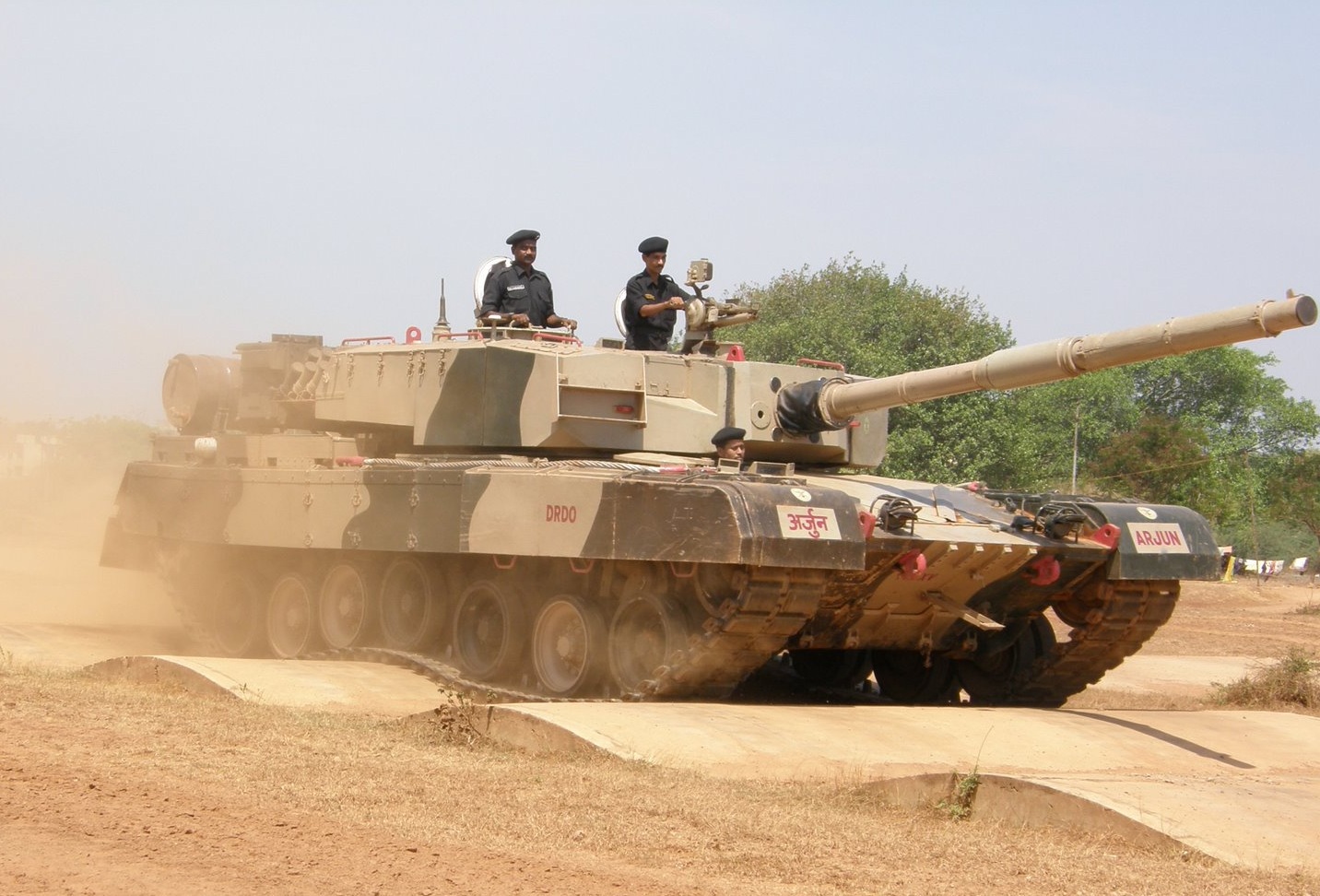 |
| An Arjun in 2008. Photo: Wikimedia Commons |
India has industrial problems.
It’s not that India can’t produce good equipment. The
Indian-designed Arjun main battle tank outperformed Russia’s newest tank, the T-90, in 2010
trials. India is one of a handful of countries that have successfully produced
jet fighters, and one of even fewer to have sent an unmanned mission to Mars.
The problem is that the Indian arms industry struggles to
produce high-quality equipment in high volume, probably due to issues with
quality control and labor quality. The Indian Navy has had dozens of avoidable
accidents, and most of them have been due to poor maintenance or human error.
Early models of the Arjun were found to have unreliable engines and inaccurate,
chipped gun barrels. The HAL Tejas jet fighter program has had a hard time
getting off the ground (pun intended). The INSAS assault rifle – an imperfect
design to begin with – was initially defective due to poor production
standards. The manufacturer was able to improve the quality of the weapon over
time, but Indian soldiers’ confidence in the rifle was already shaken. The
Indian Army is currently conducting tests on possible replacements for the
rifle.
The Indian government constantly emphasizes transfer of
technology – but technology isn’t the main issue. If Indian manufacturers had
access to every piece of U.S. technology the Indian industry still wouldn’t be
able to produce the same equipment at the same standards – or even at a lower
cost. Poor infrastructure – like poor roads and unreliable electricity – drive up
the costs to build or operate high-technology factories. The low supply of
skilled workers relative to the demand means that employees are often poached,
creating a high rate of employee turnover and forcing manufacturers to invest
much more in training.
The HAL Tejas is the perfect example. It has a similar cost
per unit to many widely-produced planes in the same class, like the most recent
models of F-16 (American), J-10 (Chinese), and MiG-29 (Russian). This makes it
much harder for the plane to compete with its more-tested rivals – which also
have better access to spare parts and maintenance, being more widely produced.
The plane isn’t bad – but given the competition, it’s hard to make an argument
for it.
Possible Solutions
The Indian government must invest in education at every
level. Better-educated factory workers will be better able produced
high-quality equipment, and having more of them available will make it easier
to produce that equipment in the necessary numbers. The Indian government also needs
to invest in basic infrastructure nationwide – especially roads and electricity
– to cut the cost of opening new high-technology factories in India. Small
islands of infrastructure aren't enough – and foreign investment is an insufficient substitute for serious infrastructural improvements.
To accomplish both of those, it will be necessary to fight
corruption in government – otherwise even the best efforts could be crippled by
kickbacks and misallocation of resources. Of course, it will take reform of the
police and judicial system to fight corruption effectively. No amount of
transfer of technology is going to reduce India’s reliance on imports until the
domestic situation improves.
We know for a fact the heights that Indians can reach under
the right conditions – but none of these efforts will be easy. It will take a
concerted government effort and widespread public support to accomplish any of
these – let alone all of them. Progress can’t come too soon.

No comments:
Post a Comment